Dinner and dance
D&D themes that survive a corporate crowd
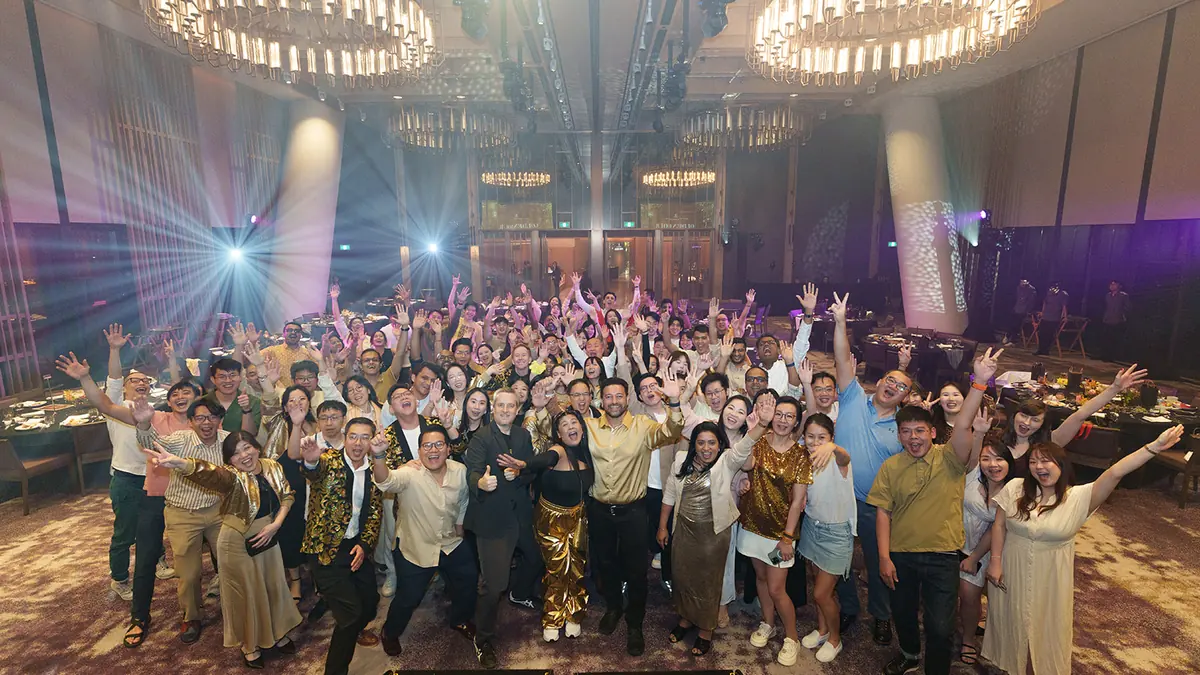
A theme is not decoration. Decoration is what you buy after you have picked one.
The actual job of a theme at a company dinner and dance is social. It is a room full of people who normally see each other in a meeting, now expected to be relaxed together for four hours. A theme gives everyone the same small permission at the same time. That is why the ones that work are the ones people can join, and the ones that fail are the ones people can only watch.
Three tests any theme has to pass
Can someone take part without buying anything? If the honest answer is no, most of the room will not take part. A theme built on a colour, a decade, or one wearable idea passes. A theme that needs a costume does not, and the people who skip it are the ones who most needed the excuse to loosen up.
Can you sit and eat in it for four hours? Masks, headpieces, anything with a hood, anything that has to be held. All of them come off before the first course and then live under a chair. If the theme is only visible while someone is standing at the photo wall, it stops existing the moment dinner starts.
Does it include the whole room? Themes that reference one country, one decade, or one part of the company quietly divide it. A room with people in their twenties and people in their fifties, and colleagues from several backgrounds, needs a theme that everyone has an entry point to.
Score a theme you are considering
Answer for the theme you have in mind. This is not a verdict, it is a way of finding which part of it will break.
What a theme has to reach to be real
A theme that lives only on the backdrop is a backdrop. To actually change the night it has to show up in at least three places: what people wear, what they are photographed against, and what the emcee and the programme can play with. Add the menu or the drinks and it starts to feel designed rather than decorated.
The photo moment matters more than it sounds. It is the one part of the evening that leaves the room, and it is what makes the next year's theme easier to sell internally, because people can see what it looked like.
If the theme cannot survive people sitting down for two hours, it is a photo backdrop with ambitions.
Test it on five people
Before committing, say the theme in one sentence to five colleagues from different teams and different age groups, and ask what they would wear. Two failures show up immediately. If someone cannot answer without shopping, it is too demanding. If two of them describe completely different things, it is too vague to coordinate, and the room will look accidental rather than dressed.
A theme that survives that conversation will survive the night.
Working one out
Tell us the headcount, the date, and what the night is meant to do for the company. We will come back with directions that fit your room, and an itemised quote.