Dinner and dance
Chinese New Year games for the office lunch, and the lo hei
A company Chinese New Year lunch is a seated meal at round tables, sometimes with partners as well as colleagues. So the games that work are the ones a table can play without getting up, and that a colleague who speaks no Chinese can join from the first round. The lo hei opens the room. Everything else is a slot in the programme, and the slot decides the game.
Most published lists of Chinese New Year games are written for families at home, or for an office floor with room to run relays. Neither is a ballroom at lunchtime. If your lunch is really the annual dinner moved to the new year, the planning is the same as for an evening, and this is how we run a company dinner and dance.
What can a seated CNY lunch play?
Filter by how big the lunch is, where people are, which part of the lunch you have, and whether the room shares a language. Open a game to see what it needs.
Game picker
Thirteen games from published lists of office ideas, sorted by what a lunch room can give them. Nothing here needs a stage crew; some need a microphone.
Lo hei at a company table: who leads it, and when
Lo hei, Cantonese for tossing up, is the communal tossing of yusheng, a dish of fish slices, vegetables, spices and condiments. Each ingredient goes in with its own phrase, and the higher the toss, the greater the fortune it is believed to bring. Singapore's heritage portal, Roots, records that it is often practised among friends and colleagues, and that while it traditionally belonged to the seventh day of the first lunar month, yusheng is now eaten throughout the Chinese New Year period. A second Roots story, Lohei, Our Way, places it at corporate gatherings and in office pantries during the new year.
Both pages tie it to the Chinese New Year period itself. A company lunch held in the weeks before the holiday falls outside that period, so opening it with a lo hei is the organiser's choice rather than something the custom asks for. Make the choice on purpose, and if you want it, tell the venue early, since every table needs a platter.
At a company lunch it works best as the opener: every table seated, nobody yet eating, and the whole room doing one thing at the same moment. That makes it the cue the room takes its energy from, so give it a clear start from the front rather than letting each table begin when its platter lands.
The question nobody settles in advance is who says the phrases. At a mixed table, if nobody knows them, the ingredients go in silently and the custom loses what it is for. Decide it per table before the day, or ask the venue whether its own staff will lead it. A card on each table with the phrases and a plain English line for each lets anyone take a turn.
The table below can be that card. The order, the ingredients and the phrases follow Roots; the English lines are ours, kept short enough to say aloud. Where Roots gives two phrases for one ingredient, the card keeps one. If your platter differs, match the phrases to what is on it.
| Goes in | Say | In English |
|---|---|---|
| Raw fish slices | Nian nian you yu 年年有余 | Plenty, year after year. |
| Pomelo or lime | Da ji da li 大吉大利 | Great luck and good fortune. |
| Spices | Zhao cai jin bao 招财进宝 | Bring in wealth and treasure. |
| Oil and plum sauce | Yi ben wan li 一本万利 | A small outlay, a large return. |
| Shredded carrot | Hong yun dang tou 鸿运当头 | Good luck is on its way. |
| Green radish | Qing chun yong zhu 青春永驻 | Stay young. |
| White radish | Bu bu gao sheng 步步高升 | Rise higher, step by step. |
| Crushed peanuts | Jin yin man wu 金银满屋 | A house full of gold and silver. |
| Sesame seeds | Sheng yi xing long 生意兴隆 | May business thrive. |
| Flour crisps | Man di huang jin 满地黄金 | Gold all over the floor. |
Where do the games and performances go?
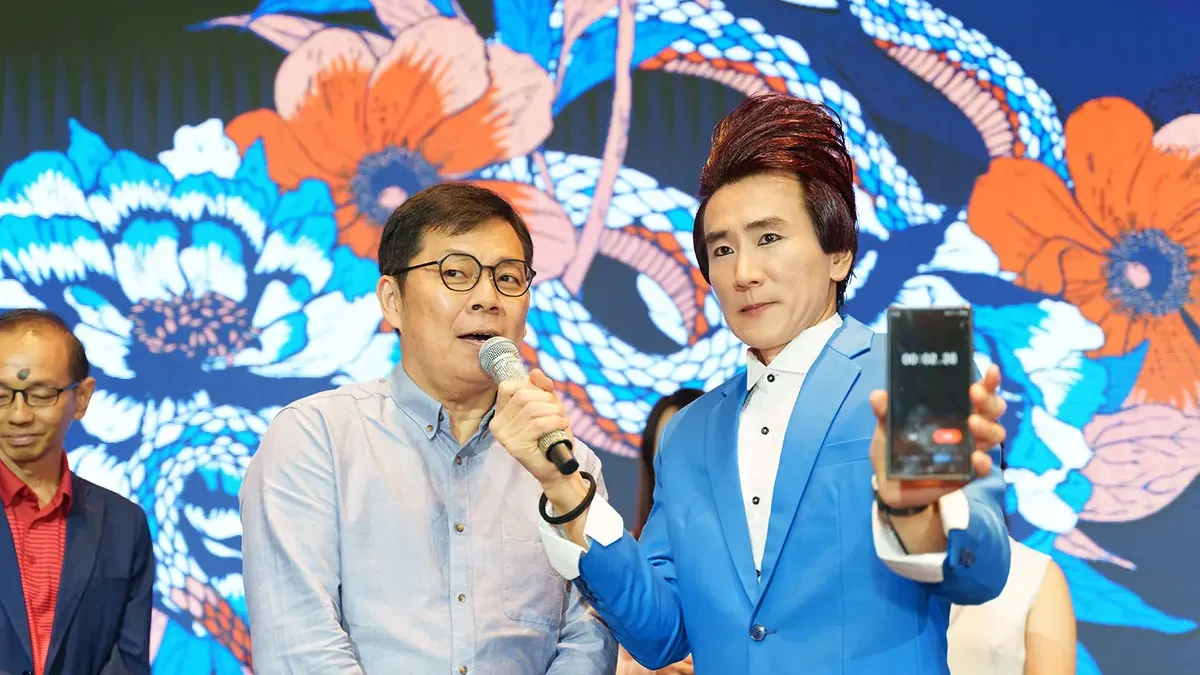
At a Chinese New Year lunch our team worked on, the photographs show an address from the stage, a live erhu, guests taking turns at the microphone with printed sheets in hand, and a phone held up on stage with a timer running. In one frame most of the room is on its feet at the tables, hands in the air. Some of those frames are on the work page.
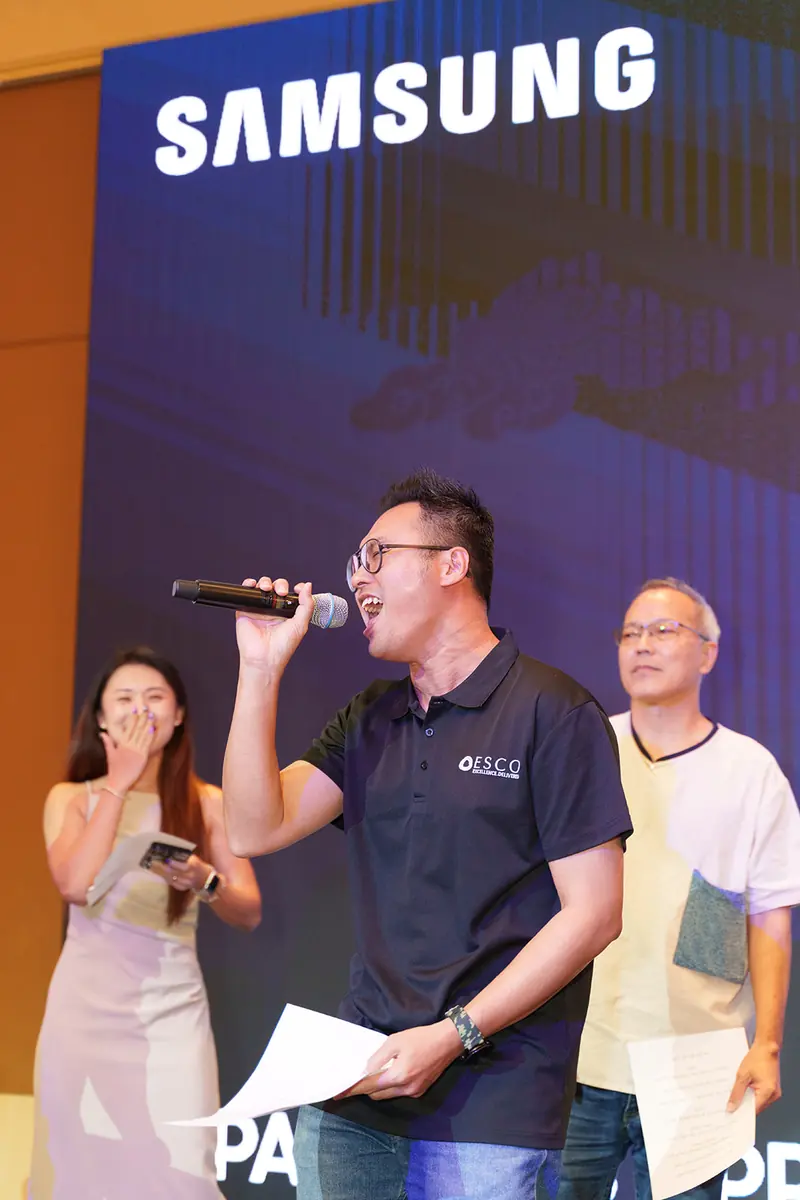
A timed game on stage plays well to the people beside it. From the back of a ballroom, a phone held up as a timer is a small bright rectangle. If a game turns on a clock or a score, put it on the screen.
A clock that only the front tables can read is a clock for the front tables.
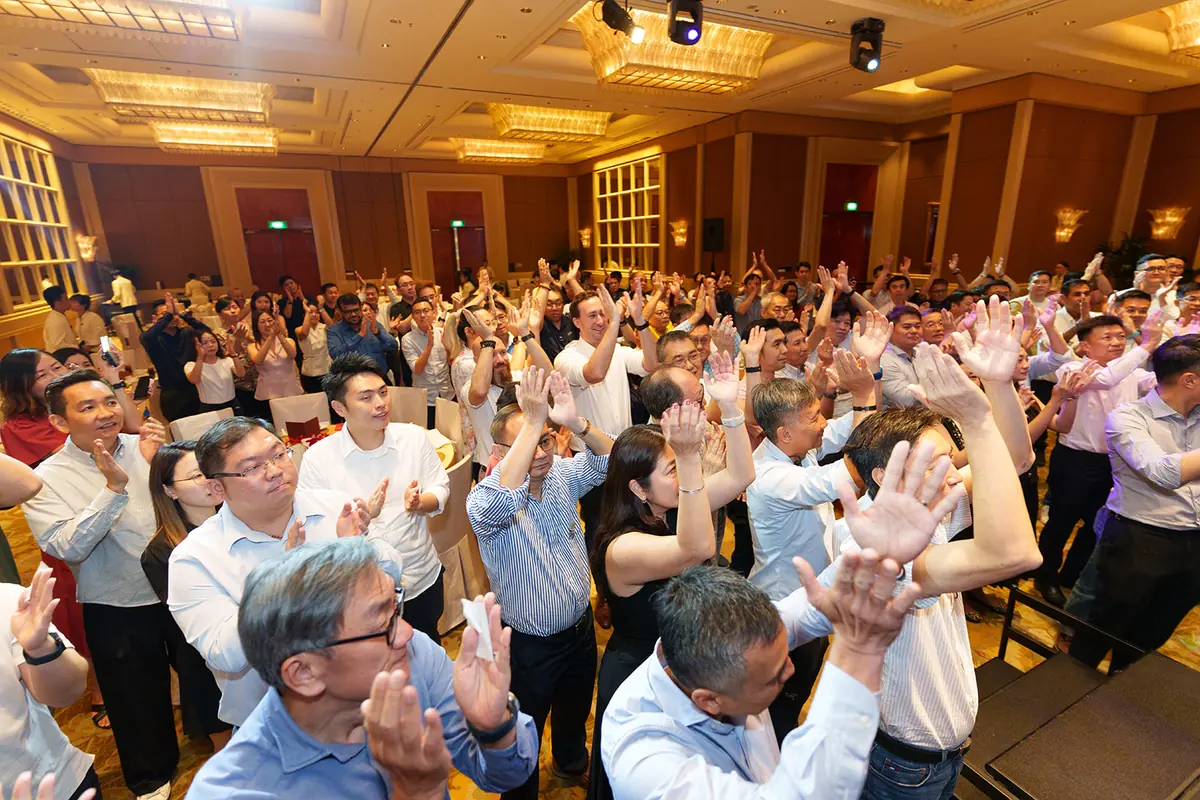
The rest follows from where people's attention is. Table games belong between courses, when everyone is seated and talking to their own table anyway. A lucky draw wants the same gaps, so plan the two together; lucky draw prize ideas covers where the draw sits and how the prizes are tiered. Stage games pull volunteers out of their seats, so they suit the end of the meal. A performance like a solo instrument needs the room quiet, so give it its own line in the run of show rather than playing it under service.

Booking it in time
The weeks before the holiday are one of the two tight stretches of the Singapore year, and in 2027 the holiday itself falls on Saturday 6 and Sunday 7 February, with Monday 8 February off in lieu. Our guide to how far ahead to book an event carries the lead times, and its advice is to treat the days around the holiday as unavailable rather than as expensive.
A lunch for one department in a private room is closer to a small company dinner than to a ballroom event, and can be planned like one. A whole company, with partners, a stage and a lo hei at every table, is a gala in everything but the hour, and wants booking like one.
Common questions
What are fun Chinese New Year games for a company lunch?
Games a seated table can play without leaving it: zodiac bingo, a chopstick pick-up challenge, a trivia round written in plain English, or a guess-the-jar count that runs through the whole lunch. Stage games such as an orange speed-peel or red packet fishing take a few volunteers to the front and suit the end of the meal. Relay-style games that need open floor suit an office party better than a lunch.
When should the lo hei happen at a company lunch?
As the opener, once every table is seated and before the first course, because it is the one thing the whole room does at the same moment. Decide before the day who says the phrases at each table, or ask the venue whether its staff will. Singapore's heritage portal places it in the Chinese New Year period itself. A lunch held in the weeks before the holiday falls outside that period, so opening one with a lo hei is the organiser's choice.
How do you keep Chinese New Year games inclusive in a mixed office?
Choose games that do not depend on language, such as bingo, a jar count, charades or a speed-peel, and write any trivia in plain English with the custom explained inside the question. Put the lo hei phrases on a card at each table with an English line for each, so anyone can say them. Keep idiom and song rounds for rooms that share the language.
Planning the lunch
Tell us the date, the room and who is coming. We will come back with a running order for the lunch and an itemised quote you can read.