How we work
What a run of show is, and why a good event day is boring
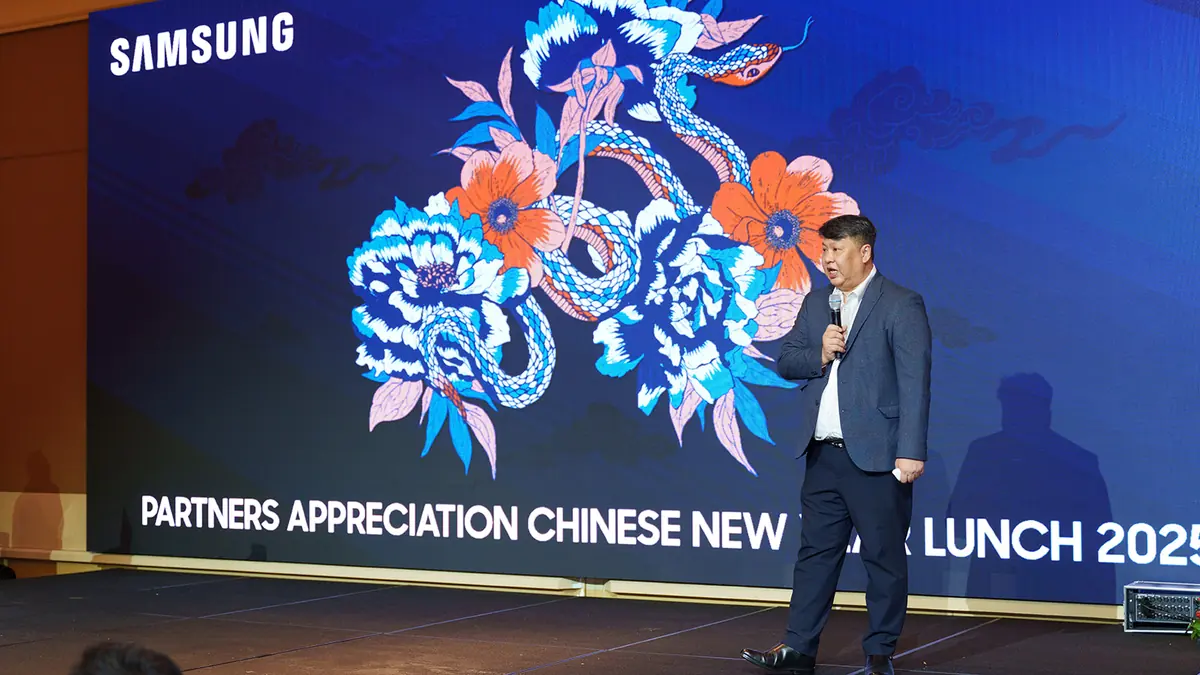
If you have ever been at an event where nothing appeared to happen and everything worked, you were watching a run of show.
It is the least glamorous document in this business and the one that decides how the day feels. Not how it looks, how it feels: whether the room senses that somebody has it, or senses that people are figuring it out.
It is not the programme
The programme is what guests are told will happen. Reception, dinner, awards, performance. Eight lines, maybe ten.
The run of show is what the crew does to make those eight lines occur, and for the same event it runs to sixty or more. Every cue, every microphone change, every screen state, every person who has to be standing somewhere specific before something else can start. It includes a great deal the audience will never see, which is exactly why it exists.
Read one
Here is an extract from the middle of a gala evening, the part where an awards segment is threaded into dinner service. Open any line to see why it is written the way it is.
An awards segment, line by line
Times, owners, and what each line is really guarding against.
Every line has one owner
The rule that carries most of the weight: no line belongs to a team, a supplier, or an idea. It belongs to a person, by name, and that person knows it belongs to them before the day.
Shared responsibility is how a trophy ends up nowhere near the stage while four people each assume one of the others has it. Once every line has a name against it, the run sheet stops being a schedule and starts being an allocation.
A programme has eight lines. The same event's run of show has sixty, and every one of them has a name against it.
One document, one owner, printed
A run of show that exists in four slightly different versions is worse than none, because everyone believes they are working from the truth. One person edits it, it carries a version number and a time stamp, and the version used on the day is printed as well as shared. Phones die, screens are hard to read in a dark room, and a printed sheet can be marked up by hand.
Send the current version the day before, and be explicit that it supersedes everything earlier. That single sentence prevents more problems than any amount of formatting.
It is a plan, not a contract
Every event slips. A course runs late, a speaker overruns, a video does not resolve. The run of show is not there to prevent that, it is there so somebody can see the consequence immediately and decide what gives.
Which means one more thing has to be written down: who is allowed to change it during the day. One person. Everybody knows who. Without that, a delay produces a conversation instead of a decision, and the conversation is what the audience actually notices.
When it is right, the day is boring in the best possible way. Things happen at the time they were going to happen, nobody is hurrying, and nobody in the room has any idea how much of that was decided in advance.
We write these for a living
Tell us what you are running. We will come back with a shape for the day and an itemised quote you can read.