Running the day
Event emcee: what a good one does, and how to brief them
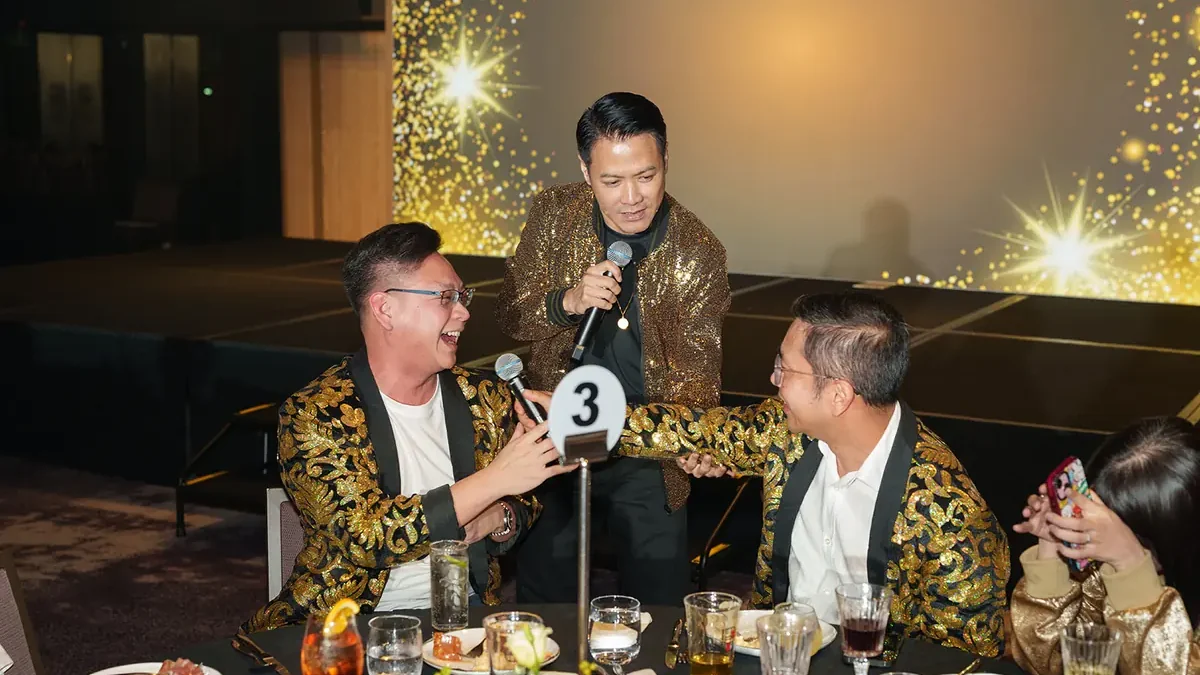
The emcee is the only person who speaks to the whole room all night. They open it, introduce every speaker, run the games, keep the evening on time and cover for anything that runs late. When it goes well, nobody notices the plan behind it.
Here is what a good emcee does, how to choose one for your room, and the brief that keeps them on time.
What an emcee actually does
- Opens the night, says who is hosting and what the evening holds, and gives the house rules.
- Introduces every speaker and segment, in the order of the run of show, with each name and title said correctly.
- Runs the games and the draw, from table games to the lucky draw.
- Keeps time, and covers when a speaker overruns or the kitchen is late, two of the things that most often go wrong on the night.
- Closes it, thanks the room, and says where guests go next, including where the door gifts are.
Ask whether the emcee will work the floor once dinner is served. Taking the microphone to a few tables keeps the room involved when attention drops after the meal.
Choosing one for your room
The languages. Many Singapore rooms run in English and Mandarin, and some need Malay or another language as well. Ask to hear the emcee in each language they will use, not just the main one.
The kind of event. A gala, a town hall and a family day ask for different energy. An emcee who is excellent at one can be wrong for another, so ask what they usually host.
A recording of a live event, not a showreel. A showreel shows the best two minutes. A recording shows how they hold a room when nothing is happening.
Whether they run games, or only host. Games need someone who can explain the rules once, clearly, and keep it moving.
Their time on the day. They should come to the rehearsal, and stay to the end, not leave before the last segment.
Build the cue sheet
The emcee's cue sheet is the run of show from where they stand: what they say at each point, and what they need from you before the night. Choose the parts your event has.
Emcee cue sheet
A starting point, in the usual running order. Your own run of show sets the real order and the times.
What to put in the emcee brief
- The run of show, with times, and which parts can be cut if the night runs late.
- Every name and title the emcee will say, with how to pronounce each one.
- Sponsor and client mentions, word for word.
- The rules for every game and for the lucky draw.
- Anything not to mention: an internal change, a sensitive subject, a joke that only works in the office.
- The dress code, so the emcee matches the room. Our dress code guide covers what to put on the invitation.
- Who gives the cues on the day, and how.
A showreel shows the best two minutes. A recording of a live event shows how an emcee holds a room when nothing is happening.
On the day
The rehearsal is where the emcee learns the stage, the microphones and the cues, and meets the speakers. It is also where you agree with whoever is calling the show what gets cut first if the night runs late, so that nobody has to decide it on stage. The emcee takes cues from one person only, the one calling the show, which is part of who does what on the day.
Keep a printed copy of the cue sheet beside the stage as well as on the emcee's cards. When something changes, change both.
For a whole dinner, the emcee is one part of how we run a company dinner and dance, along with the run of show and the people behind it.
Common questions
What does an emcee do at a corporate event?
Runs the room to the run of show: opens the night, introduces each speaker and segment, runs the games and the lucky draw, keeps the night on time, covers when something runs late, and closes it, including telling guests where to go next.
What should you include in an emcee brief?
The run of show with times, every name and title the emcee will say with how to pronounce it, sponsor and client mentions word for word, the rules for any game or lucky draw, anything not to mention, the dress code, and who gives the emcee their cues on the day.
Should the emcee attend the rehearsal?
Yes. The rehearsal is where the emcee learns the stage, the microphones and the cues, meets the speakers, and agrees with whoever is calling the show what gets cut if the night runs late.
Planning a night that needs an emcee
Tell us the event, the room and the languages it runs in. We will come back with the run of show, the emcee brief and a plan for the night, itemised.