Team building
Running team building for 100 people or more
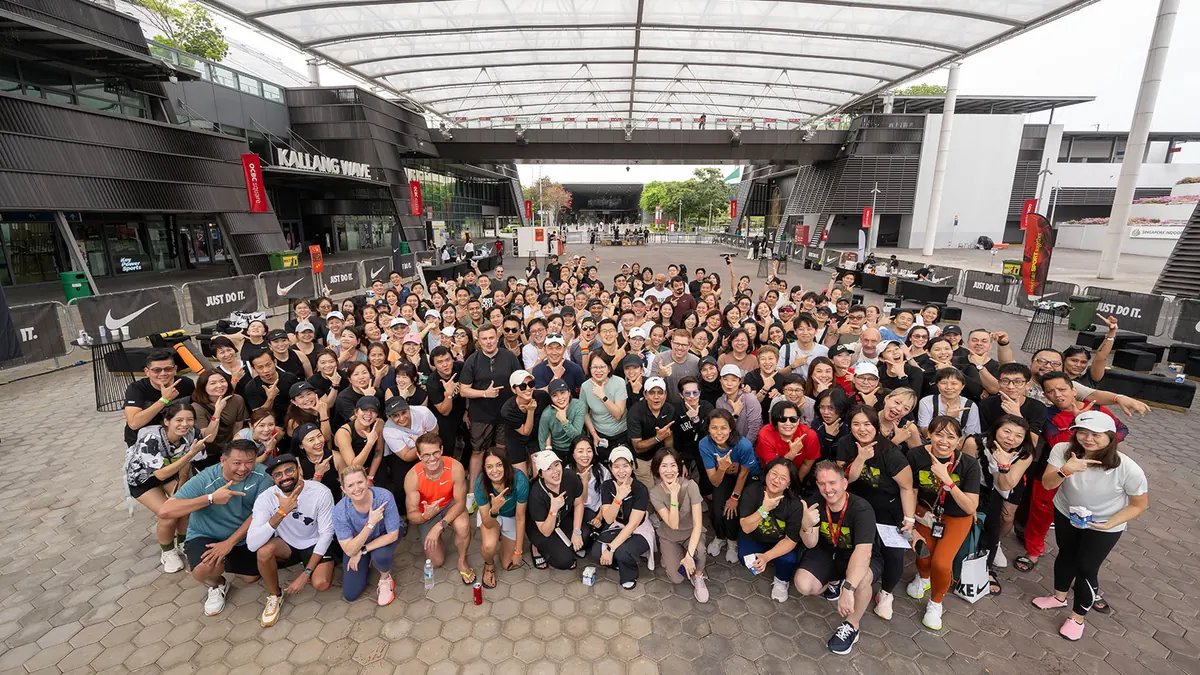
Past about a hundred people, team building stops being a question of what to do and becomes a question of how to move.
The activity is usually fine. It was fine for thirty people and it is fine for three hundred. What changes is that every instruction, every transition and every queue is now multiplied, and the multiplication is where the day is won or lost.
Where the time actually goes
Three costs get left out of every large-group plan.
Briefing. Five minutes of instruction is never five minutes. Gathering a large group, waiting for it to quieten, delivering the brief and releasing it into position reliably takes fifteen to twenty minutes of elapsed time, and it takes that every single time you do it. Brief once at the start, then design stations that explain themselves.
Movement. A group of six walks across a floor in a minute. Twenty groups do not, because they leave at different times, stop to talk, and arrive out of order. Budget several minutes for every transition, and more if there are stairs or lifts involved.
The slowest station. In a rotation, the whole floor moves at the pace of whichever station runs long, and the delay compounds each time round. This is the single biggest cause of a large day feeling chaotic, and it is fully preventable: time every station in a rehearsal, cut the long one, and give each an identical clock.
Where your day goes
A rotation, timed honestly. The proportion that is actually activity is usually the number that surprises people.
Four things that stop it collapsing
Stagger the starts. Releasing twenty groups at once creates one crowd walking in one direction. Releasing them across a few minutes, in an order you decided, costs nothing and removes the crush entirely.
Staff a spare facilitator. Not for an activity, for the floor. Somebody whose only job is to see which station is running long and go and fix it. At scale this person is worth more than an extra station.
Solve food before you solve fun. Feeding two hundred people takes as long as an activity does. Multiple service points, or a staggered lunch by group, or the whole afternoon slips by forty minutes and nobody can point at why.
Make the wet weather plan work for everybody at once. The common failure is a shelter that holds half the group. If it rains, it rains on all of them, and a plan that only works for the first hundred is not a plan.
Time every station in a rehearsal. The whole floor moves at the pace of the slowest one, and the delay compounds each time round.
Do one thing properly
The instinct with a big group and a full day is to fill it: three activities, a talk, a lunch feature, a closing. What that produces is a day of transitions with fragments of activity in between.
One well-run activity with a real debrief, and enough slack for the day to breathe, is the better trade almost every time. The slack is not wasted. It is what absorbs the station that runs long, the rain, and the group that gets lost on the way back.
Running one at scale
Tell us the headcount, the date and the site. We will come back with a format that survives the numbers, and an itemised quote you can read.